Vacuum treatment in a visible vessel
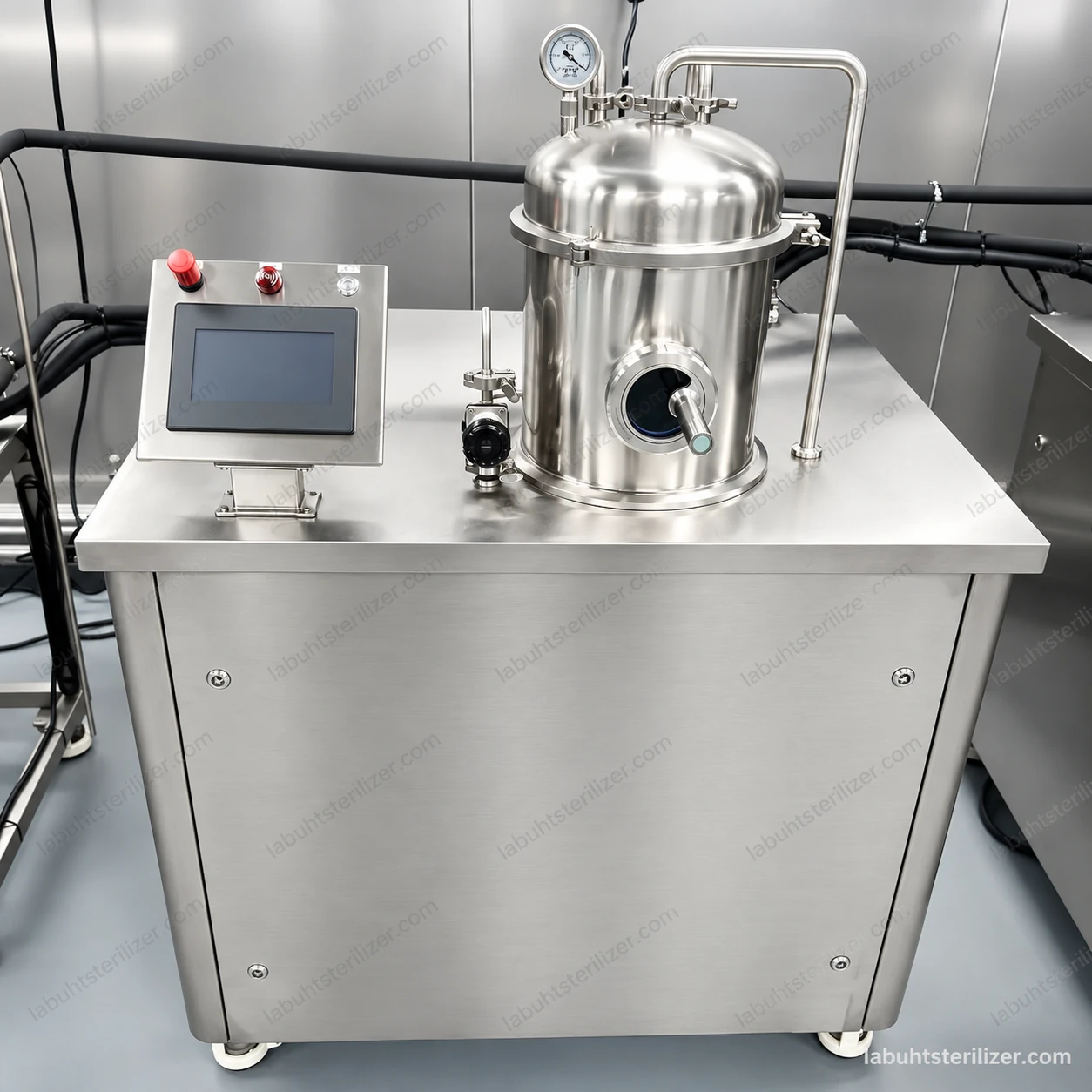
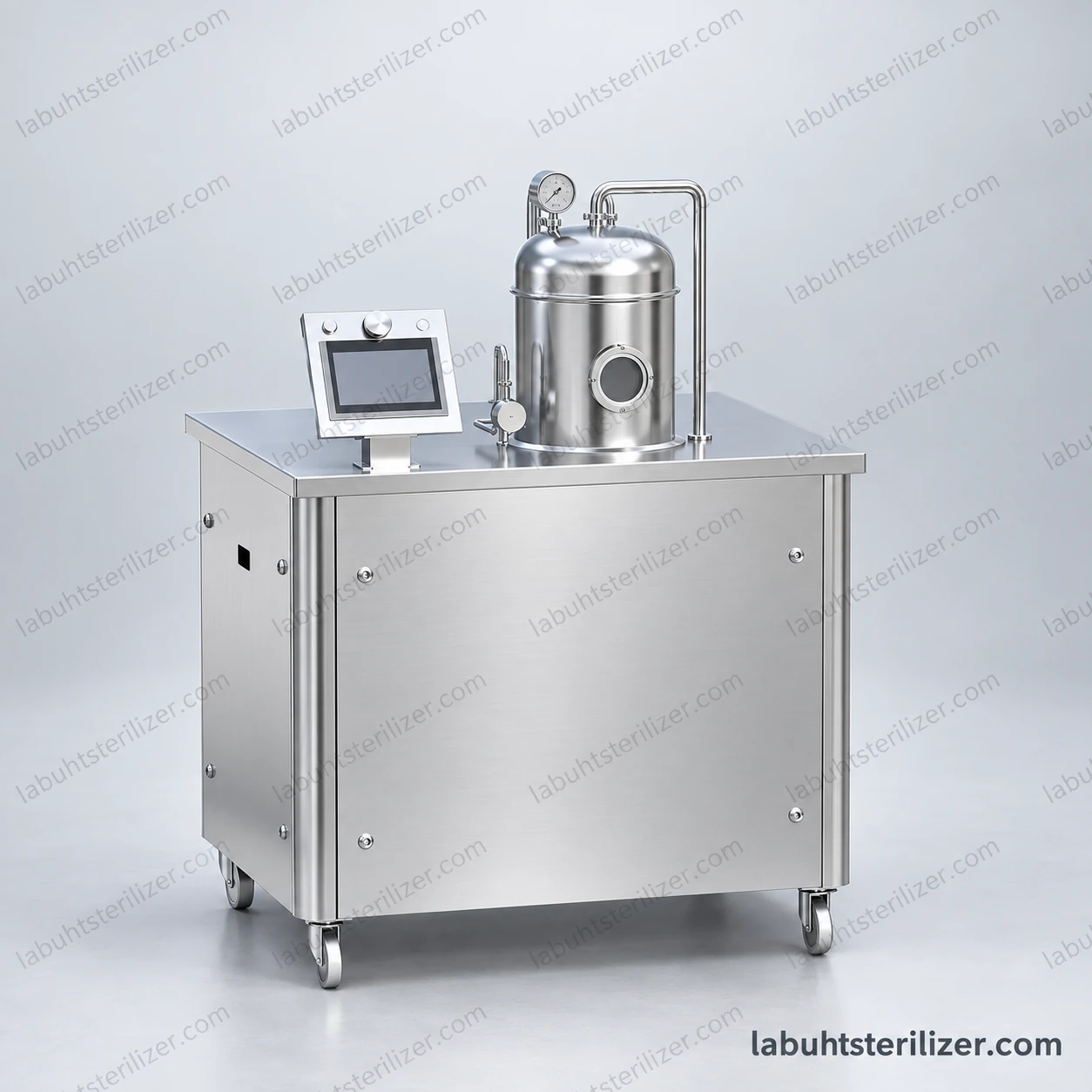
The product enters the vacuum treatment arrangement, where reduced pressure assists the release of dissolved and entrained air. The manufacturer describes thin-film deaeration with temperature conditioning. A sight window helps observe product behaviour, while the gauge and control interface make the operating state accessible.
Relating the setting to the result
Vacuum, feed temperature and flow affect the treatment together. Measure dissolved oxygen before and after the unit when oxygen removal is the research objective. A visible reduction in foam is useful observation, but it is not a substitute for a dissolved-oxygen measurement. Product viscosity and foaming tendency also affect stable operation.
Interfaces with the laboratory line
Use the outlet conditions and required flow to position the deaerator alongside the UHT unit or other modules. Prevent an uncontrolled air inlet at the next connection from undoing the treatment. Vacuum services, product transfer, drainage and cleaning connections belong in the installation arrangement; optional gas-assisted configurations are separate from a basic vacuum route.
Cleaning and access
The manufacturer lists CIP support. The vessel, viewing window, product connections and seals need an appropriate inspection and cleaning routine. A pressure or vacuum rating is not a cleaning recipe. Keep the vessel access and instruments reachable when connecting the cabinet to surrounding equipment.
Laboratory application
The unit is offered for research involving juices, dairy liquids, sauces and nutritional beverages within the selected operating envelope. Comparison trials should hold the formulation and sampling method constant while recording vacuum, temperature and flow. Performance acceptance can then refer to the measured outcome of that trial rather than an unconditional oxygen-removal claim.
Configuration details
Specifications & operating conditions
| Item | Configuration | Applicable conditions |
|---|---|---|
| Published processing range | 5–40 L/h | Manufacturer catalogue laboratory configuration; product condition affects the chosen duty. |
| Published process-temperature range | 20–90 °C | Operating range of the described laboratory configuration, not a thermal preservation schedule. |
| Listed cabinet dimensions | 1100 × 870 × 1470 mm | Catalogue overall dimensions for the illustrated family; final installation drawing defines services and access clearance. |
| Listed weight | 230 kg | Catalogue configuration; installed options can change handling requirements. |
| Cleaning connection | CIP supported | The actual cleaning circuit and operating method follow the selected unit instructions. |
A closer look at the equipment