A continuous product path you can follow
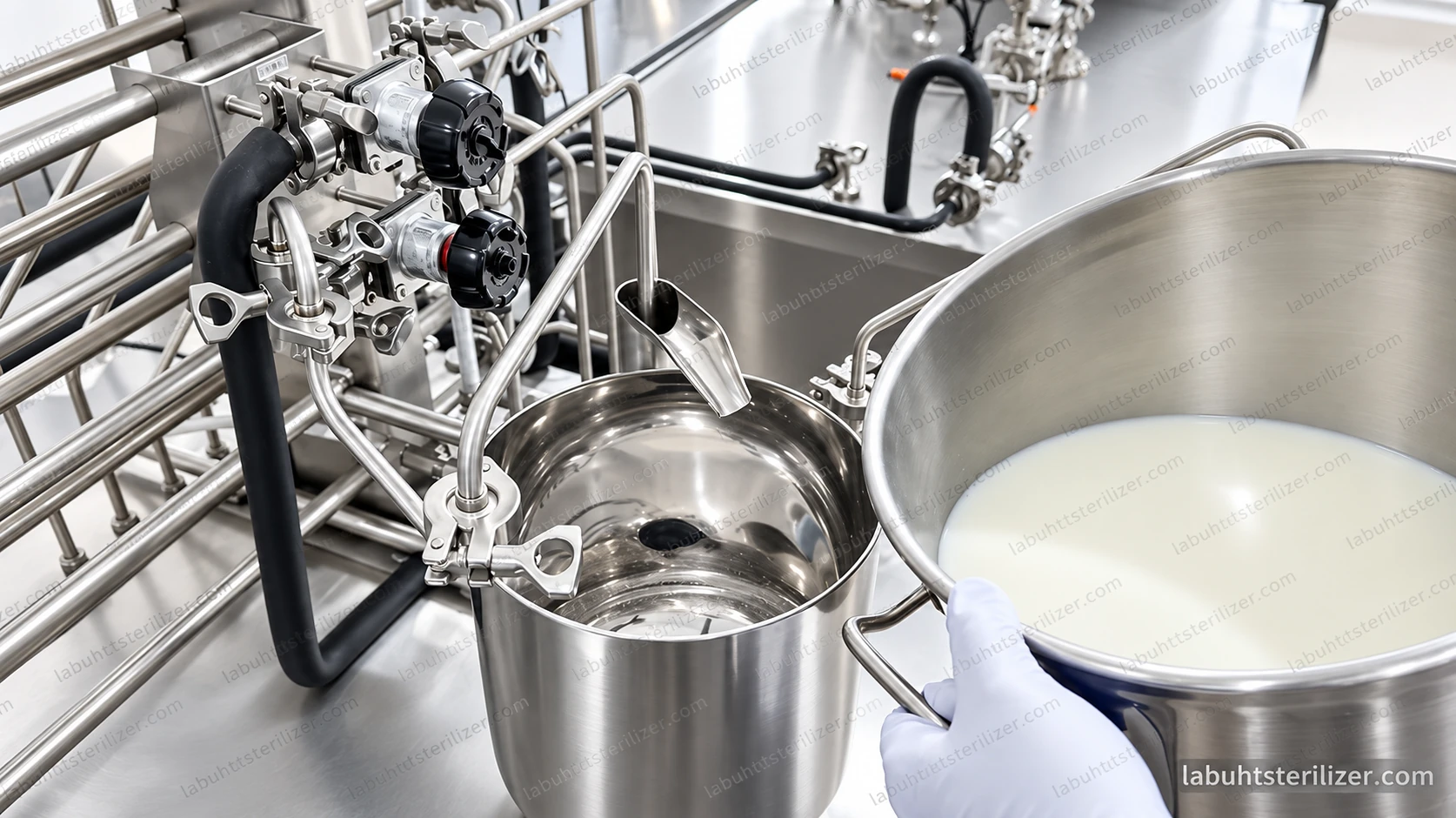
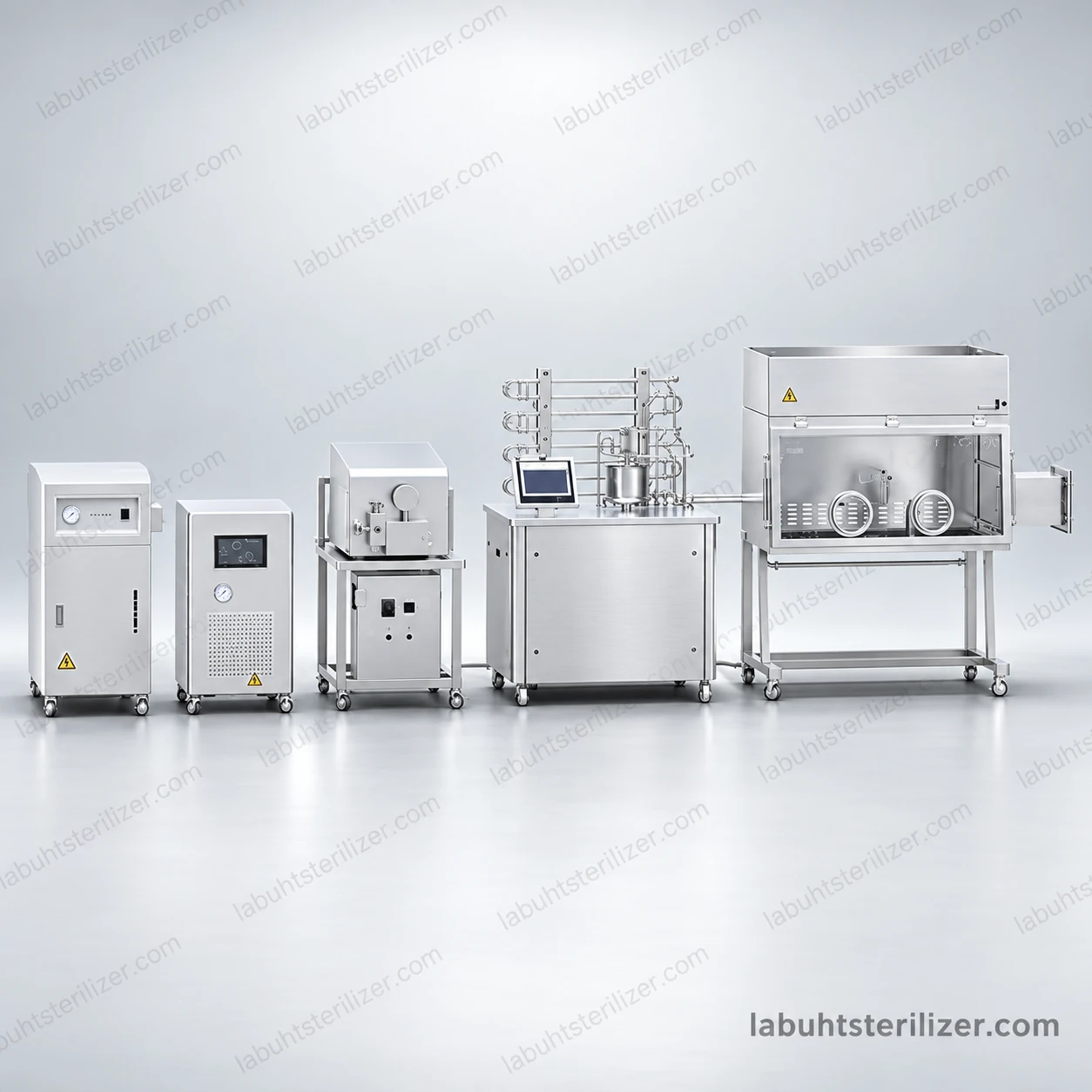
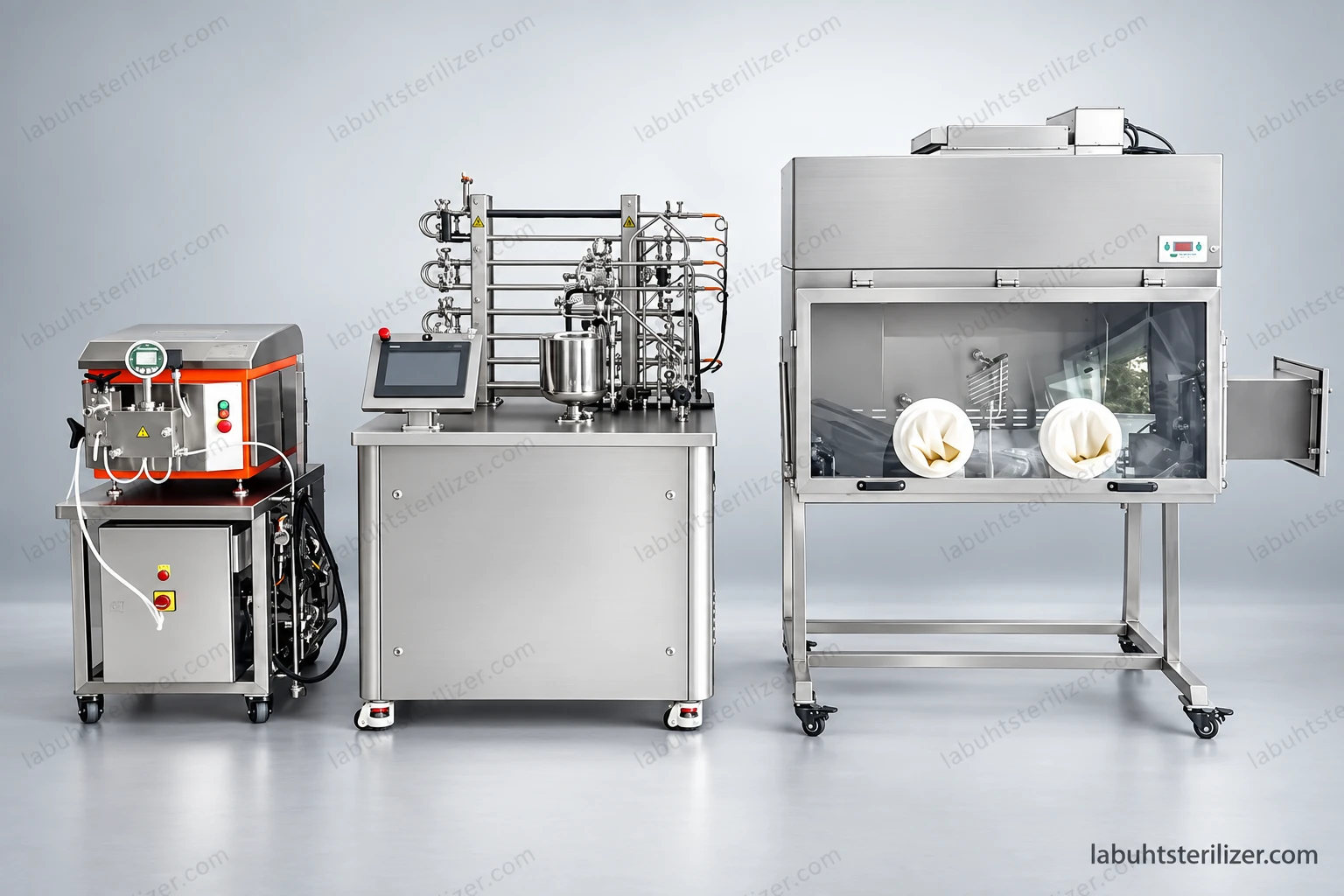
The feed vessel receives the prepared liquid formulation. The supply pump moves it through the heating section, then through the selected holding assembly and into cooling. The arrangement shown exposes the tubing and valve connections above the cabinet, with an operator screen beside the feed vessel. This makes the physical route accessible when setting up a trial or changing a configuration.
UHT and HTST are operating configurations
The thermal family supports different treatment regimes through the selected heat exchanger, operating settings and holding assembly. UHT and HTST use the same machine family with the selected temperature, flow and holding arrangement. The equipment catalogue describes plate and tubular heat-exchange arrangements and PID temperature control. Specify the required arrangement with the formulation; the photographs show a tubular configuration.
Holding, cooling and collection
The installed holding path works together with actual flow. Changing the flow changes the product residence history, so trial records need both flow and temperature. Cooling reduces the product temperature before collection or transfer. Open research collection and transfer into an aseptic filling cabinet have different hygienic boundaries; the cabinet is an additional unit rather than a property of the cooler.
Feed volume and product changeover
The feed vessel volume, product held inside the circuit, startup discard and useful collected sample are different quantities. A connected homogenizer or filler adds its own volume and transitions. Prepare material against the selected flow path and collection window; the sample planner helps account for those quantities without turning a calculated total into a machine minimum charge.
Separate options and interfaces
An inline homogenizer can be connected where the formulation and trial sequence require it. A vacuum deaerator is a separate option for investigating dissolved air and foam. An aseptic cabinet provides a controlled collection arrangement. Direct steam injection adds a different heating and flash-cooling boundary and is selected separately; it is not included in every indirect UHT unit.
Controls, cleaning and installation
The manufacturer describes touchscreen operation, temperature and flow monitoring, and configurable CIP/SIP functions for the modular system. The electrical supply, cooling services, drain arrangement and cleaning connections follow the selected configuration. Product-side cleaning, pre-sterilization and the treatment of the research formulation are separate operating steps. Keep access to valves and removable connections available in the bench or floor layout.
Equipment documentation and supply
The equipment photographs and configuration information identify the laboratory equipment range. A project quotation should name the thermal configuration, connected options, interface requirements and documents included in supply. Temperature capability does not establish a validated process for every food or a guaranteed shelf life; product and packaging validation remain specific to the research programme.
Configuration details
Specifications & operating conditions
| Item | Configuration | Applicable conditions |
|---|---|---|
| Thermal arrangement | Tubular or plate-type configuration | Manufacturer-described alternatives; the photographed unit uses exposed tubular sections. |
| Temperature control | PID with touchscreen operation | Selected control and measurement configuration; a setpoint is distinct from measured product history. |
| Published upper temperature | 152 °C | Manufacturer catalogue equipment limit; the permitted treatment for a product is established separately. |
| Modular system nominal flow options | 20 or 100 L/h | Published laboratory system variants. This does not mean every pictured standalone unit has both capacities. |
| Holding assembly | Configured to the treatment and flow | The selected assembly and operating flow determine residence time; no universal food-treatment recipe is specified. |
| Connected equipment | Homogenizer, deaerator or filling cabinet | Separately selected modules; connection sequence and scope depend on the research route. |
A closer look at the equipment